
Image
On Lament, Black Sonnets, and George Floyd

Psalms of lament are the most common type of psalm in the Bible, making up 40% of the Psalter.1 Yet one study found that only 5% of popular worship songs in the U.S. even scratch the surface of lament2—a symptom of a much deeper, truly lamentable problem: a church largely lacking the “spiritual formation… language or tools to adequately sit with the despair and sadness of recent racial injustices, senseless acts of gun violence and social unrest taking place in the world around us.”3 We need to recover the practice of lament in order to, like the psalmists, cry out to God about the gap between God’s promises and God’s seeming absence in our sin-shattered world.4
However, lament has not been absent everywhere in the American church. It has long been an essential element in African American Christian traditions—as seen clearly in African American poetry, visual art, and music (from Negro spirituals to Hip Hop).
Within the vast corpus of African American poetry, I have been especially drawn (as a lover of sonnets) to the rich tradition of African American sonnets, which includes many honest, explosive, and gut-wrenching sonnets of lament. Despite pushback,5 many Black poets have subversively used this historically white poetic form “to challenge the master narrative”6 of an unrepentantly racist nation and to reaffirm the image of God in African American people. The brief and potent sonnet form, most popularly associated with love poems, has became for these poets what Natasha Trethewey calls “a container for grief” and, furthermore, “a way to transform it.”7 These sonnets embody the essence of lament which, Rebekah Eklund writes, “takes wordless, almost unbearable pain, and gives it a shape and a voice.”8
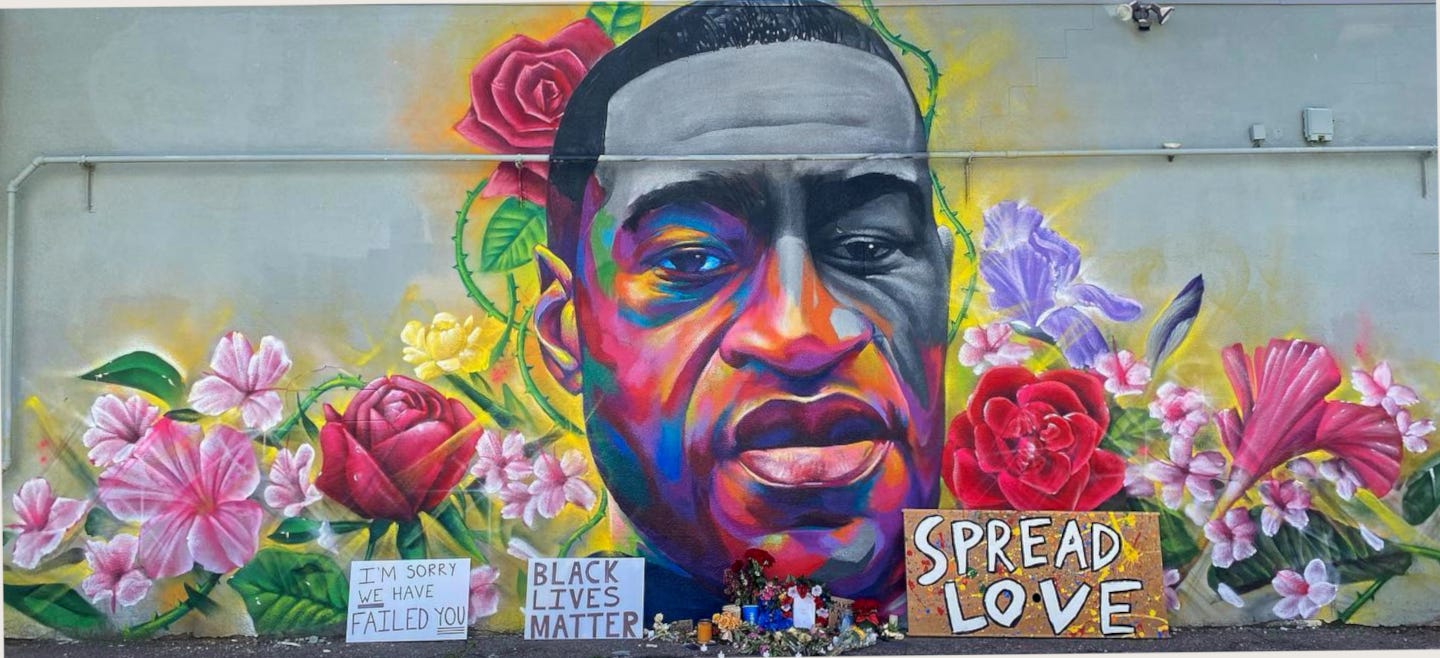
As we pause to remember the modern-day lynching of George Floyd six years ago this week, I offer my own sonnet of lament below, inspired by words from my friend Chanté Griffin, author of Loving Your Black Neighbor as Yourself.9 I invite you to take a deep breath—to slow down, as poetry so helpfully requires us to do—and to sit for a few minutes, unhurried, in this poem’s space of lament.
Image
     after Chanté Griffin

I wish I didn’t know who George Floyd was,
     had never heard his name or seen his face
displayed on screens and blazoned on brick walls,
     unbreathing monuments to life erased.

I wish that George was playing with his daughter,
     unknown to all the world, lost in her eyes.
I think of all the things he would have taught her,
     their lives unshattered and unscrutinized.

Instead, the whole world watched a white man kneel
     upon her father’s neck until he died.
My God! What do we do? How do we heal
     this hell of hashtags hewn from priceless lives?
Today, Lord, help us mourn for George and feel
     the richness of the years he was denied.
Further Reading
For anyone interested, here a few of the many sonnets lamenting the loss of Black lives:
A Wreath for Emmett Till by Marilyn Nelson — a heroic crown of sonnets10
“Trees” by Angelina Weld Grimké
“If We Must Die” by Claude McKay
See also my own humble attempts: “A Sonnet for Sonya Massey,” “The Cross and the Lynching Tree,” and “The Rule” (another sonnet about George Floyd).
Of course, however, Black poets have used the sonnet to address a wide range of topics beyond lamenting death. Here are three of my favorites:
“Limitations” by Henrietta Cordelia Ray — on creation and creativity
“Those Winter Sundays” by Robert Hayden — on love and gratitude
“From the Dark Tower” by Countee Cullen — on hope and identity
To learn more about the African American sonnet tradition, check out Timo Müller’s book The African American Sonnet: A Literary History.
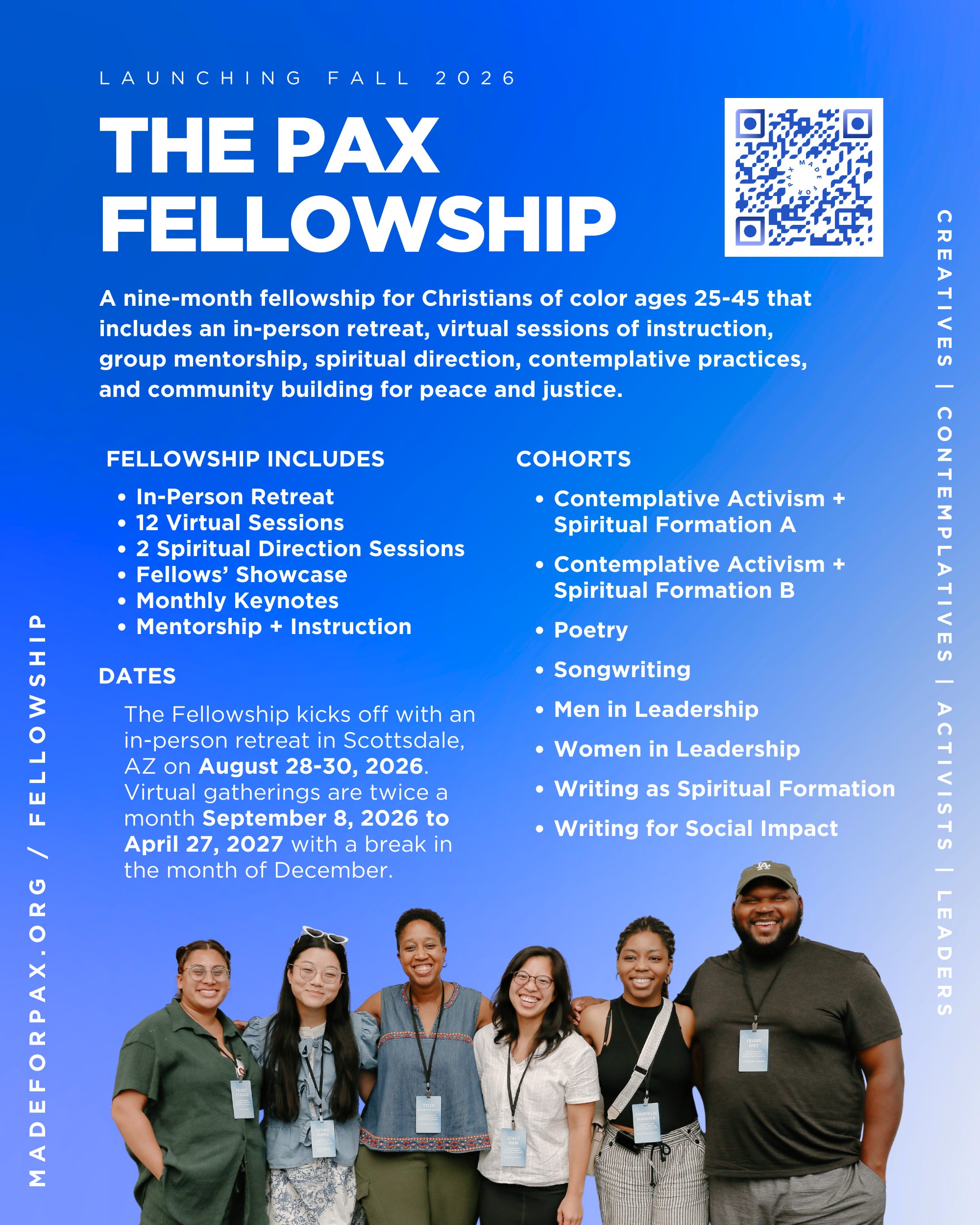
Last Chance to Register for 2026-2027 PAX Fellowship
It has been an honor to journey with Christian writers of color the past three years as a PAX Fellowship facilitator and mentor, and I am thrilled to see registrations rolling in for the 2026-2027 Writing as Spiritual Formation cohort (updated syllabus here)!
Registration will be open through June 15, 2026 or until my cohort’s fifteen spots fill up. You can also check out the other cohorts, including Poetry, Songwriting, Writing for Social Impact, and more.
Please help spread the word! A personal invitation goes a long way, so if you know any Christians of color ages 25-45 who might be interested, we at PAX would be really grateful if you could take a moment to share this opportunity with them.
Thank You
Thanks to Red Letter Christians for originally publishing “Image.” And thank you for reading (or listening). As always, I would love to hear from you in the comments.
Seeking shalom,
Michael
Rebekah Eklund, Practicing Lament (Cascade Books, 2021), 1; Soong-Chan Rah, Prophetic Lament: A Call for Justice in Troubled Times (InterVarsity Press, 2015), Introduction.
Rah, Prophetic Lament, Introduction.
Brenda Salter McNeil, Foreword to Prophetic Lament.
Eklund, Practicing Lament, 4-5. “What distinguishes lament from despair,” she continues, is that “lament is still a prayer, which means it still turns toward God, even if it only turns toward God to shake a fist.”
For example, see Langston Hughes’ essay “The Negro Artist and the Racial Mountain,” in which he attributes some African American artists’ preference for white poetic conventions to acceptance-seeking or internalized racism—“that old whispering ‘I want to be white.’”
Natasha Trethewey, “On Abiding Metaphors and Finding a Calling,” in How We Do It: Black Writers on Craft, Practice, and Skill, edited by Jericho Brown (Amistad, 2023).
Trethewey, “On Abiding Metaphors and Finding a Calling.”
Eklund, Practicing Lament, 2. She continues: “Lament… provides a structure to hang pain on. … [W]hen everything comes undone, a simple structure can help piece us back together by showing us the way—first this, then that. Step by step through the darkness.”
Chanté Griffin, Facebook, May 25, 2021: “I wish I didn’t know who George Floyd was. I wish I had never heard his name, never cried or protested over his death.
I wish he had lived a life in obscurity to everyone except those who knew him intimately.
I wish a lot of things,
mostly that he were alive today,
one year to the date his life was snuffed away.”
In a crown of sonnets, the last line of each sonnet becomes the first line of the next one. The fourteenth sonnet’s final line repeats the first sonnet’s first line, completing the circle. (Nelson does a variation on the typical crown of sonnets by having each poem’s title function as part of the sonnet itself, effectively making each poem fifteen lines long.) Furthermore, in a heroic crown of sonnets, the final lines of each of the fourteen sonnets are brought together to create a fifteenth “master sonnet,” the jewel in the crown. It’s not a poetic form for the faint of heart!
A powerful expression of the cost of hate to our humanity